
FOUR YEARS OF WAR IN UKRAINE
OUR RESPONSE FOR ANIMALSFOUR YEARS OF WAR IN UKRAINE: OUR RESPONSE FOR ANIMALS
March 6 marks four years since the launch of our emergency response in Ukraine, which began with immediate assistance for people and their animals at the border.
Along with Poland, Romania was the country that took in the largest number of Ukrainian refugees—nearly three million, according to local estimates in the early months of the war.
The southern border between Romania and Ukraine is just 144 kilometers from our shelter in Cernavoda, and that is exactly where we went to assess the needs of the fleeing people and animals, immediately setting up an assistance network that formed the basis of our response, which lasted until 2024.
OUR RESPONSE AT THE BORDER
As early as the first weeks after the conflict began, thousands of people passed through our aid station in Isaccea, fleeing the bombings with their dogs or cats. Even though they were fleeing with very little, many refused to leave their animals behind, carrying them in their arms or wrapped in their jackets. These images were captured by media outlets around the world, finally bringing the suffering of animals in conflicts into the spotlight.
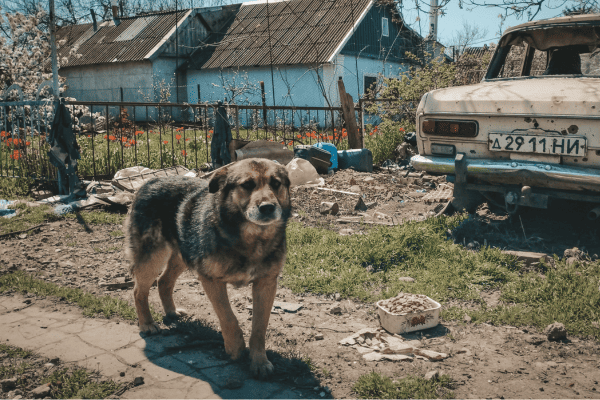
“For the first time in the history of a conflict, we are seeing images of animals as victims of war: abandoned on the streets, starving in zoos, dying in shelters. There are those left behind in deserted villages, as reported by the talented RAI reporters Giammarco Sicuro and Stefania Battistini, but also those carried on the shoulders of refugees or in the arms of children at border crossings, or those accompanying the armed forces. Photos that move the world and tell the story of a people who share the same bond with dogs and cats as we do. Images that stir our empathy toward a little-known country, yet one that suddenly feels very close. Thanks to these stories, ‘we are the Ukrainians’” (From “I cani, la mia vita” by Sara Turetta, Edizioni Sonda)
From March to June 2022, over 40 volunteers assisted 1,025 people at the border, distributing essential supplies such as food, leashes, collars, and carriers to enable them to continue their journey safely.
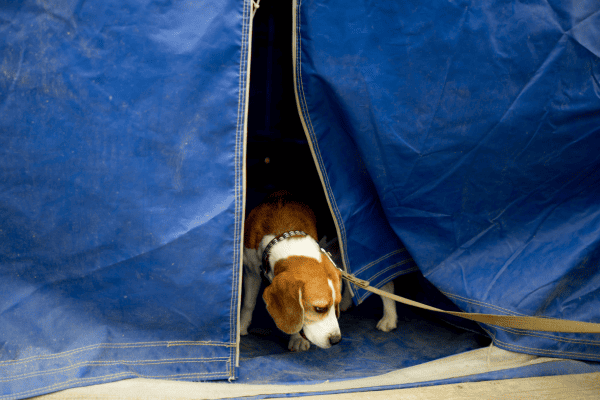
In addition, the Cernavoda shelter was used to temporarily house fleeing dogs and cats in need of a safe place to stay while they waited to be reunited with their families.
OUR RESPONSE AT THE BORDER
As early as the first weeks after the conflict began, thousands of people passed through our aid station in Isaccea, fleeing the bombings with their dogs or cats. Even though they were fleeing with very little, many refused to leave their animals behind, carrying them in their arms or wrapped in their jackets. These images were captured by media outlets around the world, finally bringing the suffering of animals in conflicts into the spotlight.
“For the first time in the history of a conflict, we are seeing images of animals as victims of war: abandoned on the streets, starving in zoos, dying in shelters. There are those left behind in deserted villages, as reported by the talented RAI reporters Giammarco Sicuro and Stefania Battistini, but also those carried on the shoulders of refugees or in the arms of children at border crossings, or those accompanying the armed forces. Photos that move the world and tell the story of a people who share the same bond with dogs and cats as we do. Images that stir our empathy toward a little-known country, yet one that suddenly feels very close. Thanks to these stories, ‘we are the Ukrainians’” (From “I cani, la mia vita” by Sara Turetta, Edizioni Sonda)
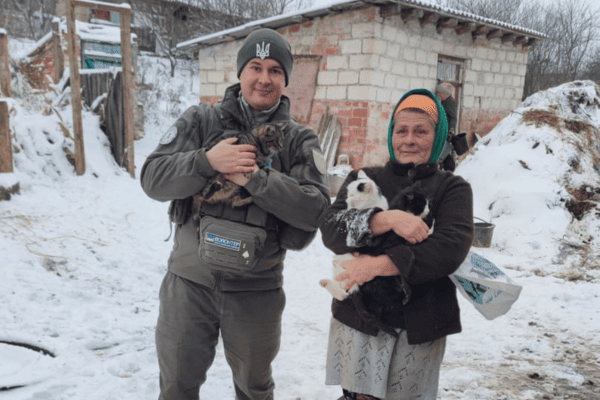
From March to June 2022, over 40 volunteers assisted 1,025 people at the border, distributing essential supplies such as food, leashes, collars, and carriers to enable them to continue their journey safely.
In addition, the Cernavoda shelter was used to temporarily house fleeing dogs and cats in need of a safe place to stay while they waited to be reunited with their families.
A NATIONAL AND INTERNATIONAL AID NETWORK
In the following months, the operation became more structured and expanded, reaching far beyond the border: we worked to support animals in the cities of Odessa, Mykolaiv, Kherson, and Kharkiv, often in areas still under attack.
We contributed to the reconstruction of shelters damaged by bombing and the creation of new reception facilities.
In addition to providing urgent medical care, we launched a sterilization program in collaboration with local clinics, aiming to curb the uncontrolled birth of litters forced to survive on the streets amid the hardships. Over two years of operations in the country, 5,487 animals were sterilized.
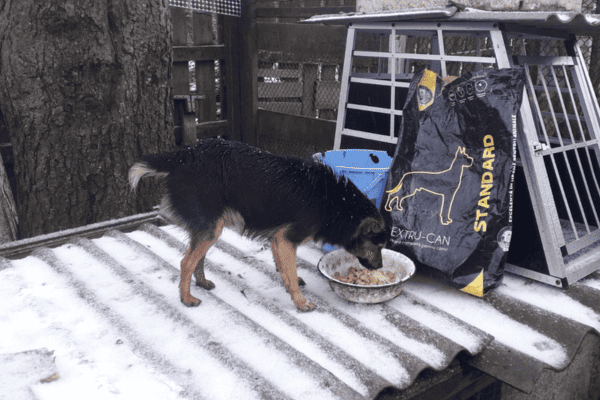
The demand for food was very high from the very beginning, and to address this emergency, regular shipments of large quantities of feed were organized. In two years of activity, thanks to a network of over 20 local partners and 400 volunteers, food distribution reached significant numbers: over 1,116 tons of animal feed were delivered to shelters, street animals, and families in need.
A NATIONAL AND INTERNATIONAL AID NETWORK
In the following months, the operation became more structured and expanded, reaching far beyond the border: we worked to support animals in the cities of Odessa, Mykolaiv, Kherson, and Kharkiv, often in areas still under attack.
We contributed to the reconstruction of shelters damaged by bombing and the creation of new reception facilities.
In addition to providing urgent medical care, we launched a sterilization program in collaboration with local clinics, aiming to curb the uncontrolled birth of litters forced to survive on the streets amid the hardships. Over two years of operations in the country, 5,487 animals were sterilized.
The demand for food was very high from the very beginning, and to address this emergency, regular shipments of large quantities of feed were organized. In two years of activity, thanks to a network of over 20 local partners and 400 volunteers, food distribution reached significant numbers: over 1,116 tons of animal feed were delivered to shelters, street animals, and families in need.
THE SITUATION IN UKRAINE TODAY
Ukraine has long grappled with a severe problem of stray dogs and cats and a very limited number of animal shelters. Even before the conflict, existing facilities were often overcrowded, partly due to the near-absence of international adoptions and the low prevalence of spaying and neutering, a practice that has never truly taken hold, even among many local organizations.
The outbreak of war has exacerbated an already fragile situation.
After four years of conflict, the economic crisis, frequent power and water outages, and damage to infrastructure have further crippled the animal welfare system. Shelters lack the space and resources needed to take in new animals.
The veterinary system has also suffered severe losses. Many veterinarians have died on the front lines or left the country, making it even more difficult to provide medical care, vaccinations, and sterilization programs.
Today, animal protection depends largely on the support of organizations and citizens from other countries.
Making the situation even more concerning is the resurgence of rabies in various parts of the country, particularly in areas bordering the Donbas: a real threat to both animals and public health that requires urgent and sustained action.
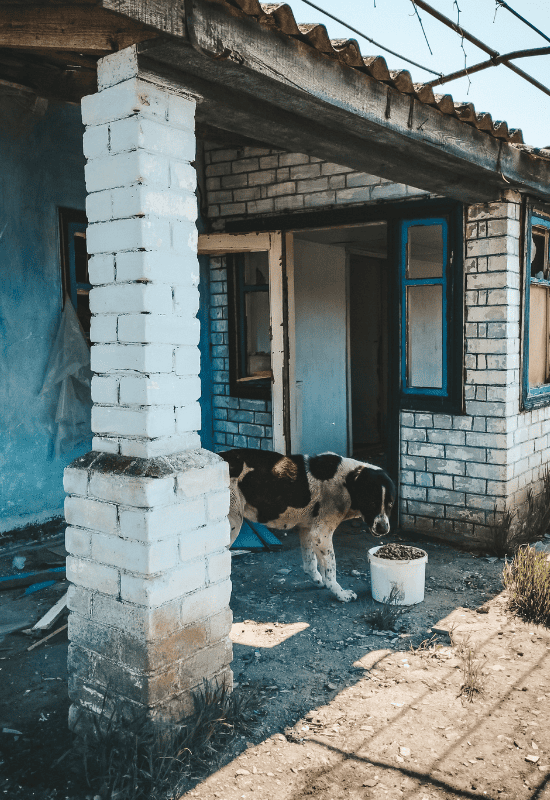
THE SITUATION IN UKRAINE TODAY
Ukraine has long grappled with a severe problem of stray dogs and cats and a very limited number of animal shelters. Even before the conflict, existing facilities were often overcrowded, partly due to the near-absence of international adoptions and the low prevalence of spaying and neutering, a practice that has never truly taken hold, even among many local organizations.
The outbreak of war has exacerbated an already fragile situation.
After four years of conflict, the economic crisis, frequent power and water outages, and damage to infrastructure have further crippled the animal welfare system. Shelters lack the space and resources needed to take in new animals.
The veterinary system has also suffered severe losses. Many veterinarians have died on the front lines or left the country, making it even more difficult to provide medical care, vaccinations, and sterilization programs.
Today, animal protection depends largely on the support of organizations and citizens from other countries.
Making the situation even more concerning is the resurgence of rabies in various parts of the country, particularly in areas bordering the Donbas: a real threat to both animals and public health that requires urgent and sustained action.

